
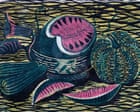
Her fabric designs jazzed up the London Underground and though Queen Elizabeth II rejected her idea for a stamp, her work made a permanent cultural imprint, as a new exhibition reveals Last time you travelled on the London Underground, here’s guessing you didn’t stop to think about how you were sitting on art history. Yet tube fabrics have a fascinating place in the development of British design. And now the woman at the centre of their story is the subject of an exhibition that aims to weave her back into the narrative, after a long period when her contribution was overlooked. Enid Marx’s designs for what was then the London Passenger Transport Board were discontinued in the 1960s, but the groundbreaking work she did in the 1930s would change the ambience of tube train interiors for ever. Until she was commissioned to create a series of new patterns, the mood board for tube carriages could be summed up in one word: dreary. They were created in-house by the factories that produced the fabric – moquette, a durable form of carpet-like velvet used to this day – and were made in a colour palette of browns and greys to blend in with the muck and sweat left behind by London commuters. Continue reading...
Back to Entertainment
Entertainment
July 14, 2026 at 11:32 AM
Enid Marx: the maverick textile artist who changed tube commutes for ever
The Guardian Culture


