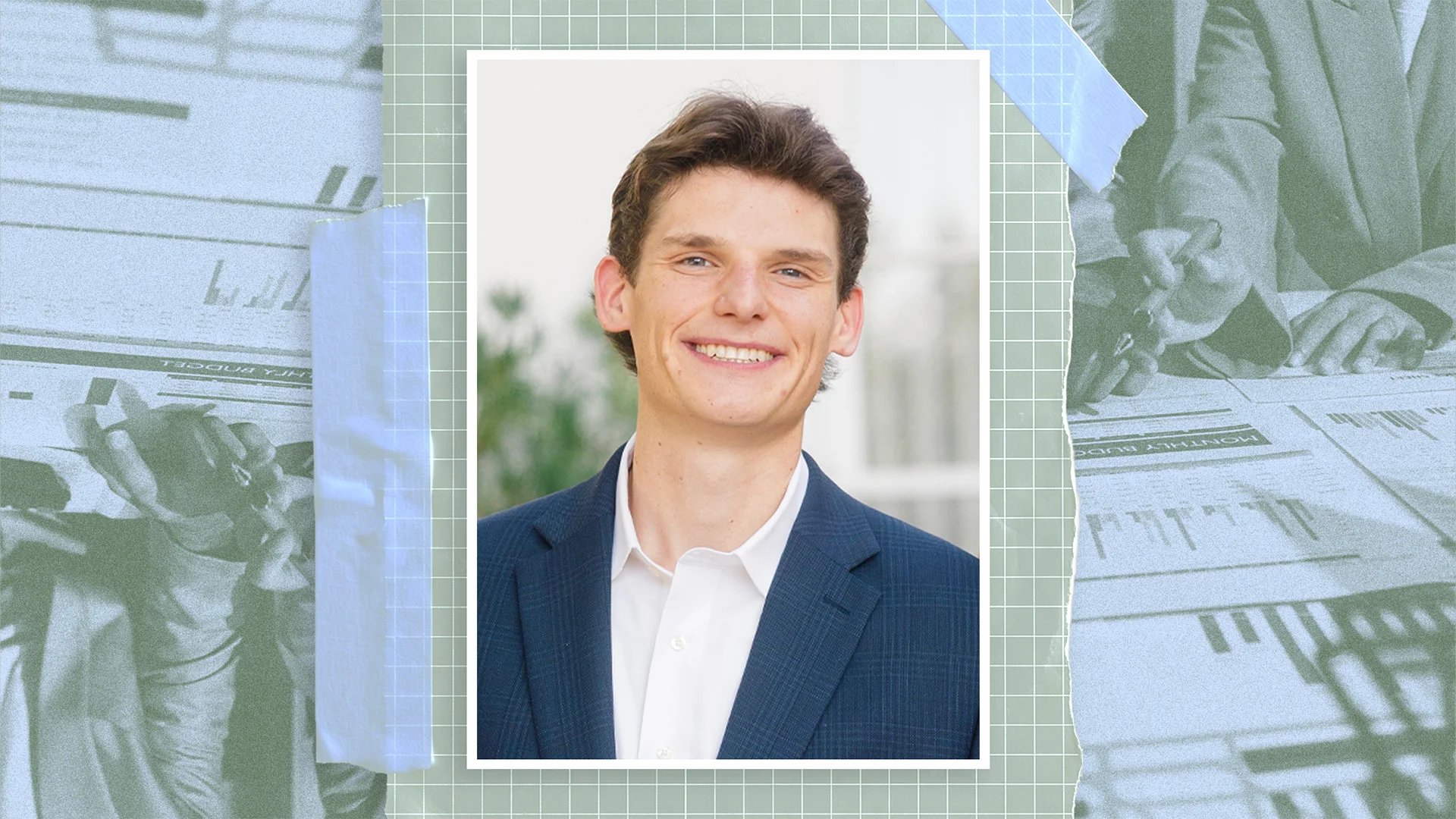
Daniel Terna for BI Tim Ryan thrives in chaos. Few signs suggest Ryan's appetite for the messiest problems. An often-smiling, mild-mannered Bostonian, he traded nearly a decade as PwC's senior partner for one of Wall Street's toughest turnaround jobs at Citigroup. "I knew that I really needed to be in a place where I get my hands dirty," he said in late May about his decision to join the bank. Citi promised to be just that when Ryan started as the head of technology in June 2024. The bank was known for its outdated software; it was facing fresh regulatory fines for failing to fix problems quickly enough; it was in the middle of a multi-year, multi-billion-dollar "Transformation" effort. Now that the transformation is more than 90% complete, Citi is counting on Ryan, who oversees approximately 50,000 full-time employees and a roughly $12 billion technology budget, to help realize its vision as a top dog on Wall Street. CEO Jane Fraser has repeatedly cast technology and AI as central to Citi's future, and Ryan is one of the people most focused on scaling the technology across the sprawling firm and its 224,000-person workforce. Daniel Terna for BI "The measure of Tim Ryan is a measure of Citi's transformation," Mike Mayo, a Wells Fargo analyst, said, adding that it's too early to tell how well Ryan has done. "He's facing the last mile problem where he's trying to complete Citi's transformation in a way that not only satisfies regulators, but better positions Citi to compete in the future." Ryan grew up in a working-class family in Boston and became the only one of his four siblings to attend a four-year college. By the time he joined Citi, he'd spent eight years leading PwC's US business, overseeing 75,000 employees and growing revenue from $16 billion to $23.5 billion. Ryan had spent some time at the consulting giant working in financial services, and said he spent about six months talking to people in that industry about what to do next, including Fraser, who has hired a number of star recruits. Some were surprised when he took the job at Citi instead of staying in the race to become PwC's global chair, but not Gary Price, a former PwC partner. "My outside view was, there was chaos at Citi. Tim is not looking to go somewhere where everything's going swimmingly well," he said. Ryan spent the first year learning how the bank's technology operates and meeting the people already trying to fix it, said Julien Courbe, who joined Citi as the head of functions technology and enterprise change in August 2024 after working closely with Ryan at PwC. "Now he knows," Courbe added. "He has a lot more opinions on the direction and how to execute." Listening helped Ryan understand Citi. The harder part is executing on what Citi needs nearly six years after a $900 million payment blunder and a $400 million fine from regulators over flawed internal record-keeping and risk-management systems. Citi has made progress — Mayo said he expects regulators to lift consent orders by the end of the year — but Ryan has the dual task of keeping pace with the rapid pace of technological advancement on Wall Street. Daniel Terna for BI Ryan is, Courbe said, the "master of execution." A few weeks into his tenure at Citi, Ryan had an idea to bring the firm's data team onto the 19th floor while running alongside the Hudson River, after realizing that many of the people dealing with some of the bank's biggest regulatory problems didn't know each other. At both PwC and Citi, Ryan has divided his team's multi-year plans into six-month goals. Under his leadership, the bank has continued to consolidate thousands of data systems and retire or streamline legacy technology applications. The long-term goal at Citi, as Ryan sees it, is to have technology drive the bank's growth. Mayo agrees, saying one of the key questions is how the bank will use tech to boost market share and profitability in each line of business. "I see Citi's technology as a microcosm for Citi as a whole, in that they are transitioning from using technology for defense to incrementally use it more for offense," Mayo said. For Ryan, executing often first means listening. "Most times I'm able to bring people together, I'm not talking, I'm listening," Ryan said, knitting his fingers together when he talked about breaking down silos. "I truly believe 80% of the solution to any problem is there in the room." When making a big decision, Ryan said he'll typically go to his team, other Citi executives, and maybe a board member for advice. He often asks his six kids how they'd feel. He'll usually think it over on a run. Ryan also prides himself on his "open and clear" communication — he subscribes to the idea that "bad news doesn't age well." Every other weekend, he spends three or four hours writing bimonthly Thursday notes to the tech team, without the help of AI. He hosts "Talks with Tim," where 30 random people in his organization can sign up for a video chat. Daniel Terna for BI "Every one of those, I'll leave with at least one idea," he said. Despite the tech chief's more gentle affect, Price said he could understand complaints that surfaced about what some saw as a hard-charging style when Ryan was still in line to lead PwC globally. "Imagine a room with 3,000 partners in there: very humble, almost understated, but very clear and effective," Price, who took no issue with the communication, said. "Now put him in a room with 10 members of his leadership team: much more direct, the expectations are higher, often intense." In many ways, the more direct side of Ryan, whom Price called "very competitive," is most aligned with Citi's new conception of itself: a bank of relentless winners. "I love to win, by the way. We all have different styles of going about it," he said. One of the biggest cultural changes Courbe has noticed in his time at Citi is a new emphasis on accountability. Someone owns every initiative, he said, and Ryan values people who live in the specifics, who run toward problems. Mayo, the analyst, is "cautiously optimistic" about Ryan's work at Citi so far, but thinks changing the bank's culture is key to changing its overall direction. He described the Citi of yore as "reckless, arrogant, and complacent" on Investor Day. "This is no easy fix. It's a grind, it's a slog, it takes time," he said. "Directionally, they're going the right place." As is true across Wall Street, AI is key to eventually bringing Citi to that right place. Ryan is focused on driving AI adoption across the bank, where more than 80% of employees are regularly using the technology. Companies, he said, aren't going to win based on the model they use, but on employee buy-in. Citi can track which employees are using which tokens, but Ryan isn't interested in "over metric-ing." "What we realized very quickly is don't measure everything, because you'll stifle it. You have to measure the big things, but don't try to measure every last-mile use case, because, frankly, you'll uninspire people if they feel like they're being watched too much," he said. Instead, he said a workplace thrives on a balanced mix of metrics and pride. Citi's competitors are somewhat split on how to monitor their workers: Goldman Sachs, for example, focuses on tracking teams' velocity, while JPMorgan has AI dashboards for individual engineers. Daniel Terna for BI With more AI comes higher costs. The bank monitors its spending to make sure each AI initiative aligns with its strategy, but Ryan said he doesn't want to discourage employees from reimagining workflows. Citi encourages employees to use the AI model that best suits their needs rather than automatically opting for the most advanced option, because, as Ryan put it, "you don't need a Ferrari to do some of the stuff." The balance — between control and ambition, between satisfying regulators and putting Citi on offense — is one Ryan will be judged on. If all goes well, Citi will complete its transformation soon and get out from under regulatory scrutiny; when that happens, Ryan will be among those who deserve credit, Mayo said. Like Ryan, Mayo judges based on tangible results, and the tech chief still has his work cut out for him, given that subpar technology was at the heart of Citi's decadeslong struggles to be the powerhouse it says it wants to be. "Throw in Tim Ryan, throw in Superman, throw in Hercules, it's still going to be a multi-year transition." Read the original article on Business Insider
Back to Business

Business
July 13, 2026 at 3:57 PM
Meet the man tasked with fixing Citi's tech — and securing its future
Business Insider