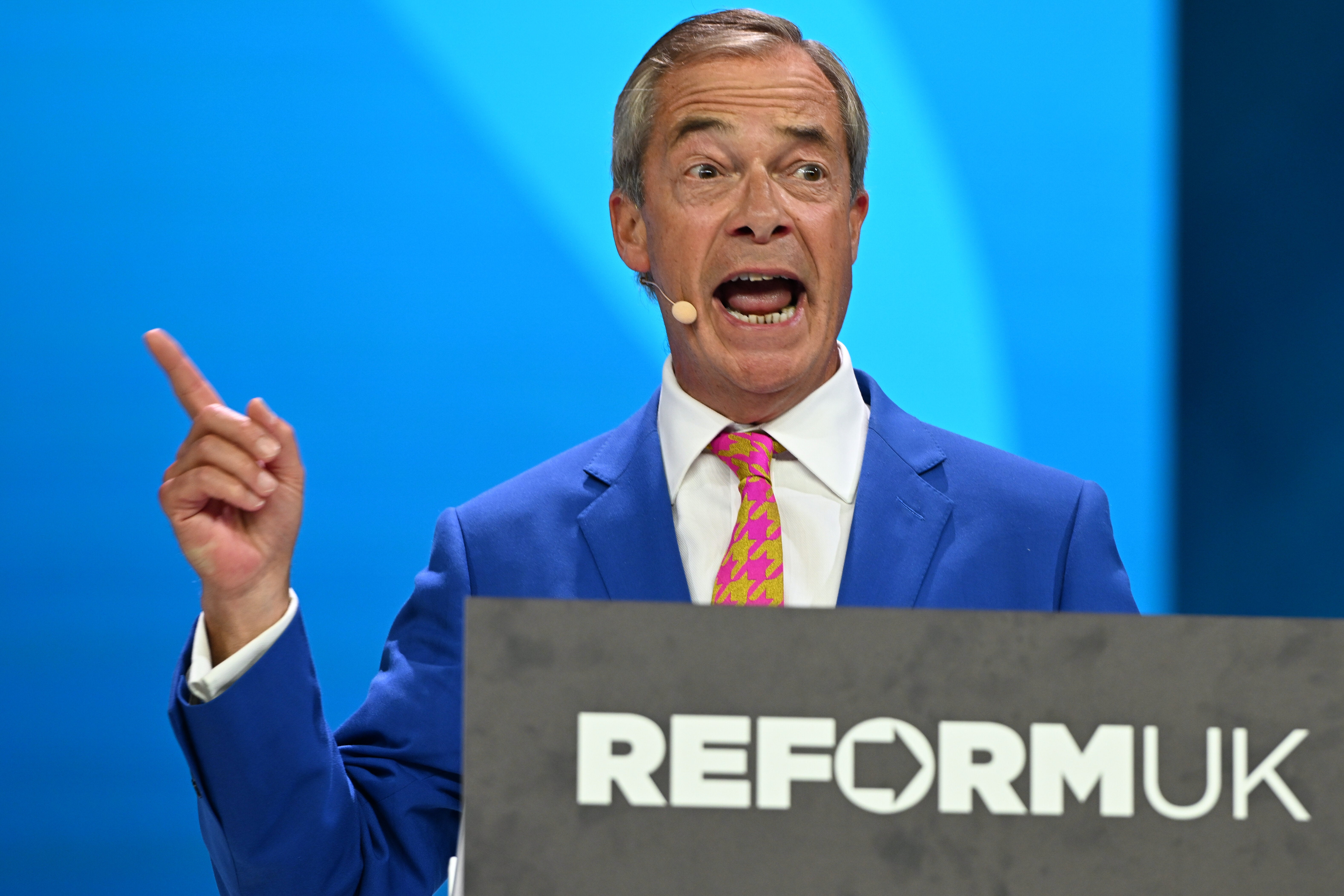
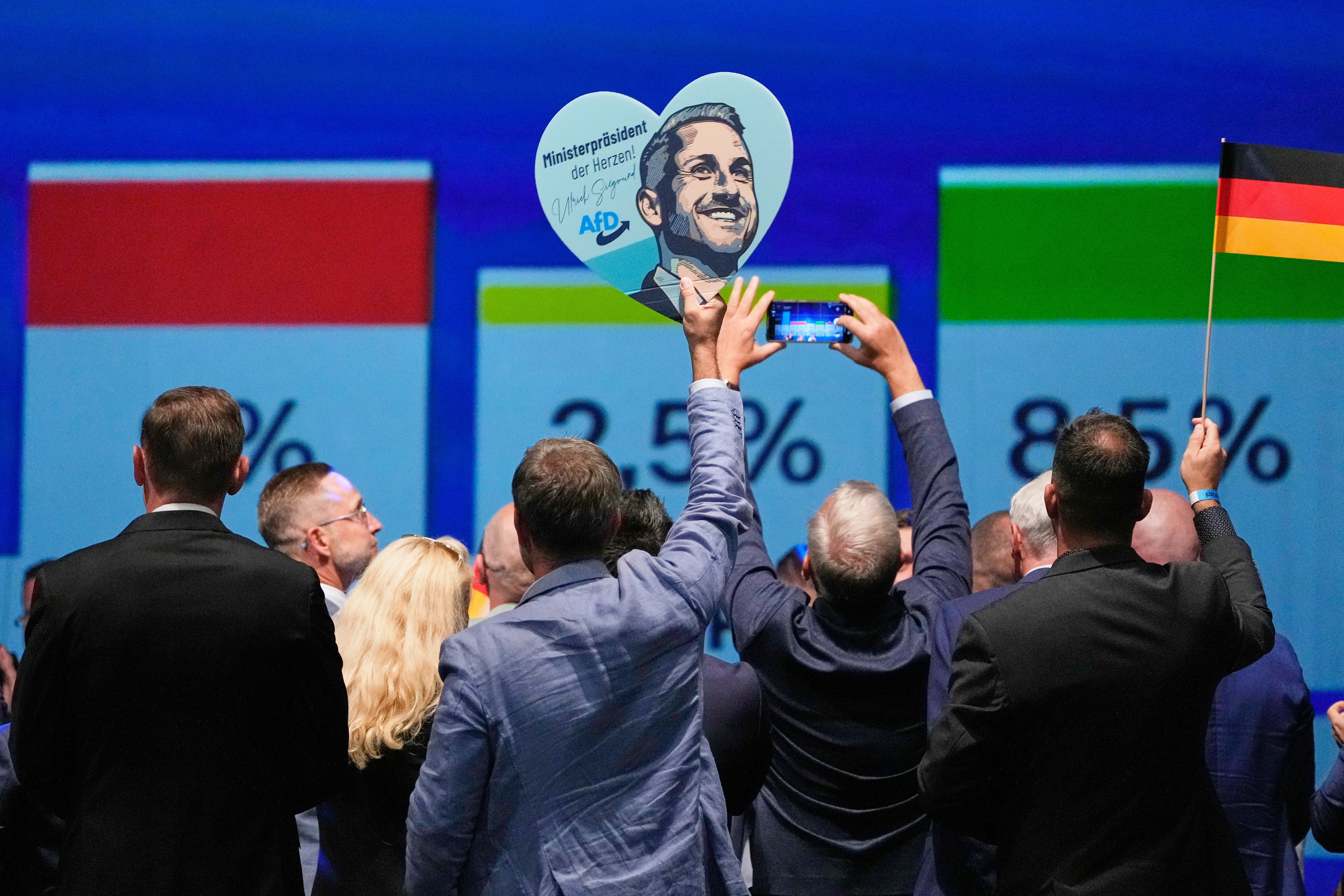
Party members celebrate with a sign of AfD top candidate Ulrich Siegmund after the first results at an election party of the "Alternative for Germany" (AfD) after the Saxony-Anhalt state elections in Magdeburg, eastern Germany, Sunday, Sept. 6, 2026. Germany’s far-right party has just secured a clear victory in a regional election, sending a huge shockwave across Europe. AfD (Alternative for Germany) fell short of an absolutely majority but, with 43.8% of the vote, it will now be the largest party in Saxony-Anhalt. That means AfD is now the first far-right party to gain power in Germany at a state level since the Nazi era of World War 2. Europe is stunned – and concerned about what comes next. Here’s what you need to know. What Is The AfD? The AfD is anti-immigration and anti-woke. It advocates the idea of “Germany for Germans” and vows to “make Germany great again”, replicating much of Donald Trump’s MAGA messaging. The AfD is also pro-Kremlin and wants to stop supporting Ukraine, even pushing to stop Ukrainians from getting refugee status. That matters because the German government is the largest single donor to Ukraine right now. The party wants to half sanctions against Moscow and start buying cheaper Russian energy again, too. These messages have significant appeal in eastern Germany, which is still significantly poorer than the west, 37 years after the fall of the Berlin wall. But the AfD evidently has some appeal across the rest of Germany, too, as they are currently leading the nationwide parliament polls on 28%. Concerns around the party have been prevalent for some time, with the German authorities have labelling some elements of the AfD anti-democratic. A number of its regional factions, including the one in Saxony-Anhalt, have been labelled far-right extremist. Ulrich Siegmund, AfD’s lead candidate in the region, said his party’s regional win would “shake all of Germany”, insisting the party would “get our country back, and we are starting with Saxony-Anhalt”. Beatrix von Storch, the AfD’s deputy leader, also told BBC Radio 4’s Today programme: “The conservative parties will disappear from the landscape, as happened in Italy, and is about to happen in the UK, as it might also happen in France with Marine Le Pen taking over the presidency. “Calling our leader candidate the most dangerous man in Germany makes us laugh, and makes the people laugh, because they voted for him. “That’s democracy. They are not afraid of him, they are afraid of the policy which is done by all the other parties in a huge coalition in the region and by Germany in the federal state.” The logo of the "Alternative for Germany" (AfD) party is fixed on a German national flag for the state elections in Saxony-Anhalt during an election campaign event in Magdeburg, Germany, Friday, Sept. 4, 2026. Was This Local Election Result Particularly Shocking? The AfD is three seats short of complete control in Saxony-Anhalt, having won 39 seats in an 83-seat parliament. One of the smallest of Germany’s 16 regions, it has a population of 1.7 million out of 59 million eligible voters across the country. It is also Germany’s poorest region and many voters allegedly feel nostalgic for the stability they experienced under communist rule, before 1989. Even so, there’s been a sudden boost in support for the AfD within Saxony-Anhalt, which has an ageing, dwindling population and is reliant on foreign workers. The far-right party managed to more than doubled its vote from five years ago. Meanwhile, the centre-right Christian Democratic Union – the party of Germany’s Chancellor Friedrich Merz – came in a sorry second place on 17.2% of the vote after losing half of their supporters. He is deeply unpopular and has evidently failed on his promise to reduce AfD’s appeal to the general public. The centre-left Social Democrats secured 9.3%, the Greens 8.9% and the Left party 8.6%, while the BSW party secured 5.3%. The co-leader of the CDU’s coalition partner, the SPD, said “many people are scared” about exactly what might happen next. How Has The Rest Of The World Responded? There’s been a deeply divided response. Poland prime minister Donald Tusk said: “In Poland, only idiots or traitors can rejoice at the triumph of the AfD in Germany.” France’s Europe minister Benjamin Haddad said the win was a “serious moment in Europe” adding that “nationalism and xenophobia will never be a solution.” “We must listen with humility to the anger, the concerns, the fears, and respond to them,” he added. “We cannot forget our history. That is the meaning behind the choices made by France and Germany.” But Trump’s former ally Elon Musk has congratulated AfD on their win, writing “well done” on social media. Siegmund thanked the world’s richest man for “your support and for your clear and highly important perspective on the political developments of our time”. He added: “I would very much welcome the opportunity for strong and constructive cooperation.” US president Donald Trump also shared a screenshot of the election projection on Truth Social but did not at a comment. Russian presidential envoy Kirill Dmitriev copied Trump’s post, and labelled it a “historic win for the pragmatic AfD”. Why Does This Matter? The German Economic Institute has warned that AfD policies will ripple through the country, particulaly its “calamitous” immigration policy. Germany is also a dominant force in the EU as Europe’s biggest single economy right now. But the AfD is Eurosceptic and hostile to what it describes as the “failed project” of the EU. It has also questioned Nato membership, at a time when western unity is being tested by Russian aggression, Donald Trump’s tariff threats and ongoing concerns over China’s economy. What Happens Next? The AfD’s national leaders say they want to form a coalition – but Siegmund wants to hold onto his party’s extreme policies at the same time. Centrist German parties typically refuse to co-operate with the far-right in what they call a “firewall” principle. The CDU has insisted it will still not work with “extremist parties” like the AfD, but von Storch remained confident they will collaborate as otherwise they cannot form a government. There’s also the knock-on effect for the EU, as elections are expected in France, Italy, Spain and Poland in the coming months. However, far-right parties across the continent do not all necessarily agree with each other in tone and messaging. Their main unifier is their anti-immigration message. The UK government has already ruled out working with the party, and grouped it together with Nigel Farage’s right-wing Reform UK. Emma Reynolds, chief secretary to the Treasury, told Times Radio: “We will not be reaching out to a far-right populist party. I consider them pretty far-right.” She claimed that like Reform UK, AfD “feeds on the grievances of people and don’t come up with solutions”. Listen to Commons People, the podcast that makes politics easy. Every week, Kevin Schofield and Kate Nicholson unpack the week’s biggest stories to keep you informed. Join us for straightforward analysis of what’s going on at Westminster. Related... 'Lacking In Class': Minister Roasts Pete Hegseth Over D-Day Commemoration Attack On Europe Labour Minister Says Pete Hegseth's D-Day Attack On Europe Over Immigration Left Him 'Horrified' How Do We Define The Far-Right?
Back to Lifestyle
Lifestyle
September 7, 2026 at 8:35 AM
Germany's Far-Right Party AfD Just Secured A Major Election Win. Here's Why That Matters
HuffPost UK