
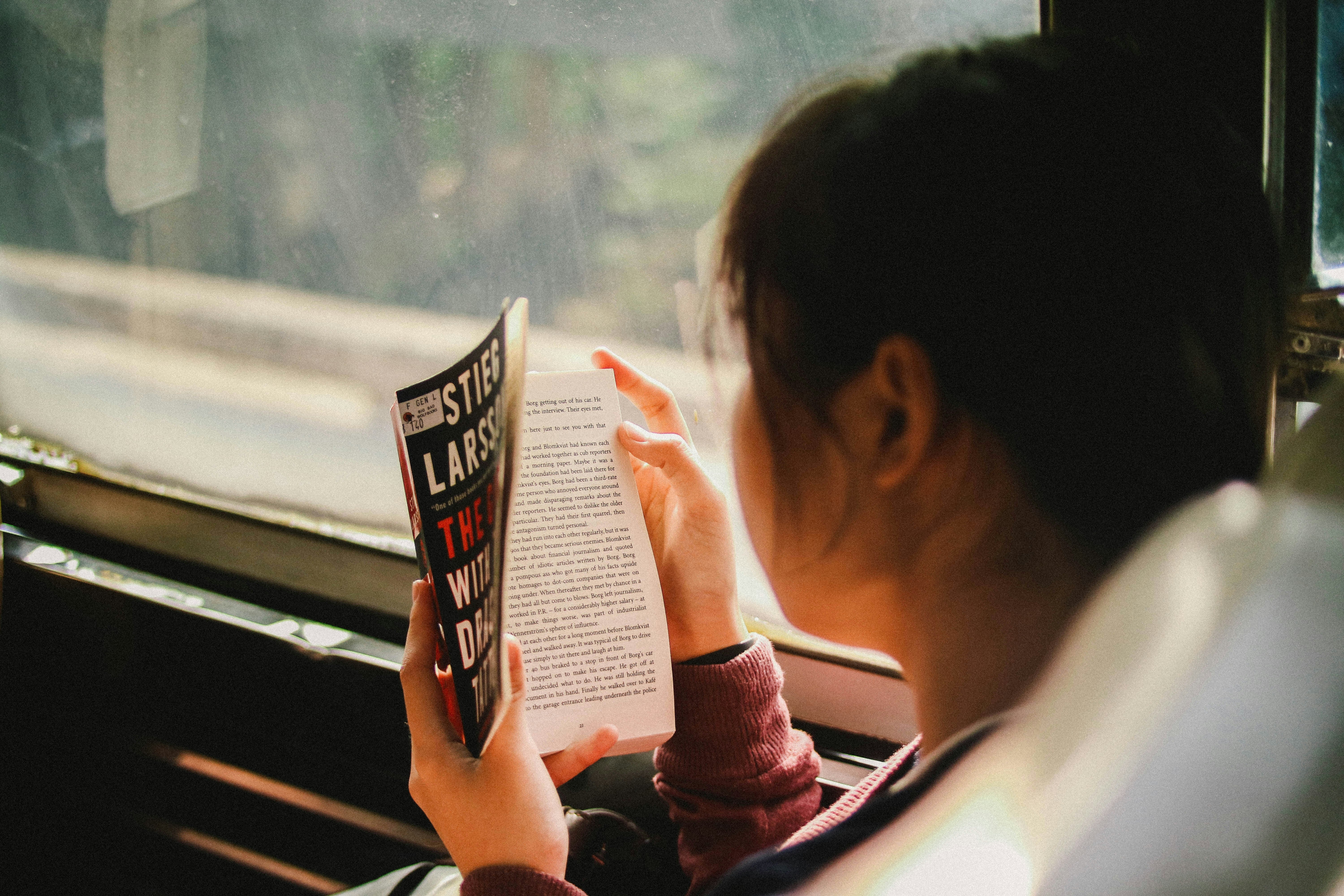
You probably already know that reading is pretty good for us. It’s been linked to better mental health, more empathy, a lower risk of dementia, and even increased longevity. There’s only one problem: a lot of us can’t find it in us to do it. Earlier this year, the National Literacy Trust found a 36% decrease in reading for pleasure among teens compared to 2005 figures. Over a third of UK adults say they’ve given up reading as a hobby. In 2025, meanwhile, a YouGov poll found that 40% of Britons hadn’t read or listened to a single book in the last year. But what about people on the other side of that spectrum? After all, that same YouGov poll found a not-insignificant portion (4%) of “mega-readers”, who tear through 50 volumes or more a year. That’s roughly a book a week. Here’s what we know about the people who reach that bar or even exceed it: 1) They may be more comfortable giving up on books they don’t like Super-reader Tyler Cowen, who claims to have gone through multiple books a night, previously said that if you’re not feling transported by your current options, “Just stop reading, put them down”. Online, readers have described the practice of “DNF-ing” a book (DNF stands for “did not finish”). Many say this helped get them out of a reading slump – personally, I went from reading one book a month to six with the method. In case you need any more convincing, only books which “emotionally transport” readers into their fictional worlds seemed to improve readers’ empathy scores in one study, while trudging through pages they hated temporarily lowered them. 2) They don’t put too much pressure on themselves early on Literary Hub writer Kelsey Rexroat interviewed “super-readers” who finished 100 books or more a year. She noted that most of them weren’t bookworms as kids, and many began with a “modest” daily target. And Chasity Moreno, a worker in the New York Public Library’s Reader Services department, agreed, telling TIME: “You don’t have to be like, ‘I’m going to read War and Peace’”. This is how I broke my screen addiction and fell back in love with reading. I started with a 10-page-a-night goal, which I still sometimes rely on when I’m a bit stuck. 3) They track their progress more often Podcast host Anne Bogel, who also runs the Modern Mr D’Arcy blog and says she reads hundreds of books a year, told TIME that she’s a “big believer in tracking one’s books – it really does help develop a more satisfying reading life”. A Redditor agreed: “I love seeing the progress and it’s personally quite motivating to see how many books I read in a month,” they wrote. We know that regularly monitoring how close you are to your goal is linked to greater odds of success – perhaps this approach works for reading, too. 4) They create clusters of interests Last year, I worked my way through every Jane Austen novel, as well as her juvenilia. Rather than making me feel stuck, the restriction proved really useful: I knew I was going to like the style, which helped me stick to the list. Tyler Cowen said he sometimes likes to read in “clusters”, i.e. books on the same topic. Sunday Times data journalist, Tom Calver, who made good on his resolution to read 52 books in one year, found success with the trick, too. 5) They’re always packing pages It sounds obvious, but having a book on you all or most of the time really can help. Cowen said reading “anywhere” – from bed to the bus – helped him reach his goal of about a book a week. Frederick J. Goodall, who read 614 books in 2025, told Literary Hub: “I kept a book with me wherever I go. “If I have to pick up the kids from school, I read a book while I’m waiting in the car line. If I have to take my mom to the doctor, I read a book then.” 6) They could be more aware of the links between sounds and written words A 2024 study found that the best readers tended to have larger sections of the parts of the brain linked to categorising and associating different pieces of information, as well as a thicker Heschl’s gyrus, which hosts the auditory cortex. Study author Prof Mikael Roll said this link might not be as unlikely as it sounds. “To pair letters with speech sounds, we first need to be aware of the sounds of the language. This phonological awareness is a well-established precursor to children’s reading development,” he told The Conversation. Related... Does Listening To An Audiobook Actually Count As Reading? Experts Weigh In I Tried Reading Before Bed For A Week To See If It Helped My Insomnia The Underrated Victorian Author To Read If You Love Jane Austen And Brontë
Back to Lifestyle
Lifestyle
September 20, 2026 at 9:00 AM
6 Habits 'Super Readers' Build To Finish At Least 1 Book A Week
HuffPost UK