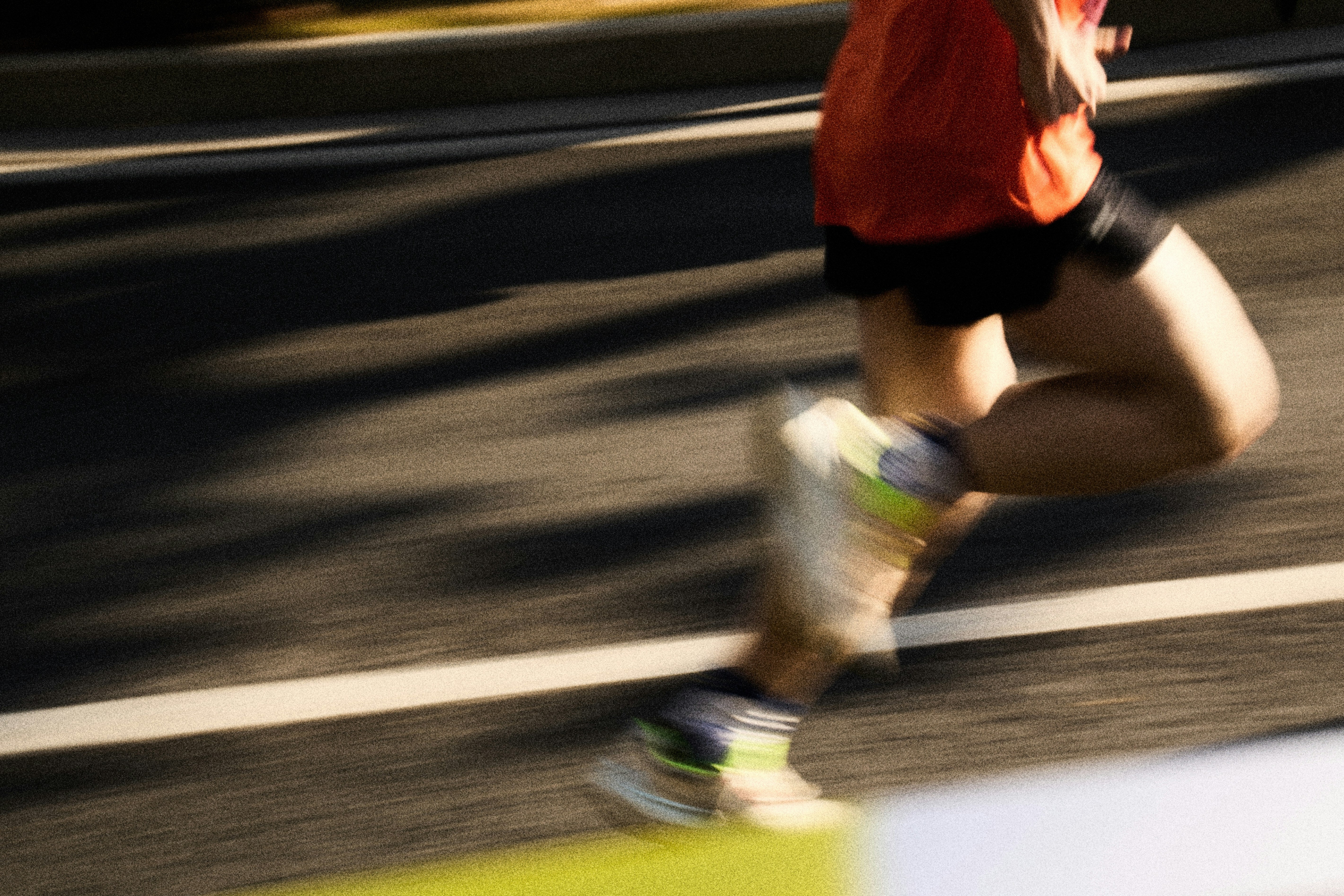
!function(n){if(!window.cnx){window.cnx={},window.cnx.cmd=[];var t=n.createElement('iframe');t.display='none',t.onload=function(){var n=t.contentWindow.document,c=n.createElement('script');c.src='//cd.connatix.com/connatix.player.js',c.setAttribute('async','1'),c.setAttribute('type','text/javascript'),n.body.appendChild(c)},n.head.appendChild(t)}}(document);(new Image()).src = 'https://capi.connatix.com/tr/si?token=8b034f64-513c-4987-b16f-42d6008f7feb';cnx.cmd.push(function(){cnx({"playerId":"8b034f64-513c-4987-b16f-42d6008f7feb","mediaId":"426003e6-31ab-4ecf-b3ce-28c645b13714"}).render("6a8d598fe4b004726c0a3821");}); Not only is any movement far, far better than none, but even a 10-minute, relatively slow jog can benefit your joints, heart, and longevity. Still, new research published in Cell Reports Medicine has suggested that sprinting, along with other higher-intensity exercise like intense cycling, could offer unique health advantages. In fact, the Rockefeller University – whose Weslie R. and William H. Janeway Laboratory of Molecular Metabolism, which was used in the study, is headed by Dr Cohen – said, “Three minutes of sprinting can do something that 90 minutes of moderate exercise apparently cannot: dramatically reshape the molecular contents of the bloodstream”. Why might sprinting or HIIT be so different to regular exercise? In this study, scientists split participants into two groups: those tasked with completing six sets of 30-second sprints on a stationary bike, and others who’d been asked to cycle at a moderate pace for 90 minutes. The researchers also measured the blood of people involved both before and after their respective exercise sessions. While the 90-minute group only saw changes in fewer than 0.25% of their blood proteins, all-out sprints appeared to alter about a quarter of all proteins. And sprinting also seemed to trigger changes in about 200 metabolites, as well as a surge in proteins linked to functions like blood vessel growth, tissue remodelling, and hormonal signalling. These might have entered the bloodstream through a process known as ectodomain shedding, which means existing proteins rush into a person’s system. Human fat cells exposed to the blood of people who’d undergone high-intensity training seemed to act differently, too. They processed fuel, sensed nutrient availability, and responded to hormones in ways not seen before the addition. Not so with the longer, slower exercise group. For them, blood changes were smaller and appeared three hours after movement, while they didn’t seem to have anything like as much of an effect on fat cells. What might that mean for our health? This study looked at data from 53,000 people in the UK Biobank to see what the blood changes they noticed among the sprinters might mean for people’s health. It turns out that lots of the proteins that flooded their bloodstreams after high-intensity exercise were linked to a lower risk of heart and metabolic diseases, like type 2 diabetes. And over a quarter appeared to be associated with slower biological ageing. Speaking to the Rockefeller University, Dr Cohen said: “What’s exciting here is that just a few minutes of intense exercise can trigger a significant molecular response. “And we still see it after eight weeks of training, which tells us this response isn’t simply a product of the body struggling to keep up with unfamiliar stress. It may be that the responses we observed are intrinsic to intense exercise”. Meanwhile, Luke Olsen, who conducted the studies for this research, added: “It’s well appreciated that different intensities of exercise stimulate distinct body-wide adaptations. “However, the molecular mechanisms linking these intensity-dependent adaptations have remained largely elusive. Our work suggests that exerkines – proteins and metabolites released into the bloodstream following exercise – are highly sensitive to exercise intensity and may be the key mediators of the health-promoting effects of short bursts of vigorous exercise.” Related... I Have A ‘Fat’ Disease That Doesn’t Respond To Diet Or Exercise. I Hate That I Still Feel Ashamed. Moving More Seems To Reduce Dementia Risk – Unless It's In This Context Study After Study Found This Exercise Is 'Superior' For Sleep
Not only is any movement far, far better than none, but even a 10-minute, relatively slow jog can benefit your joints, heart, and longevity. Still, new research published in Cell Reports Medicine has suggested that sprinting, along with other higher-intensity exercise like intense cycling, could offer unique health advantages. In fact, the Rockefeller University – whose Weslie R. and William H. Janeway Laboratory of Molecular Metabolism, which was used in the study, is headed by Dr Cohen – said, “Three minutes of sprinting can do something that 90 minutes of moderate exercise apparently cannot: dramatically reshape the molecular contents of the bloodstream”. Why might sprinting or HIIT be so different to regular exercise? In this study, scientists split participants into two groups: those tasked with completing six sets of 30-second sprints on a stationary bike, and others who’d been asked to cycle at a moderate pace for 90 minutes. The researchers also measured the blood of people involved both before and after their respective exercise sessions. While the 90-minute group only saw changes in fewer than 0.25% of their blood proteins, all-out sprints appeared to alter about a quarter of all proteins. And sprinting also seemed to trigger changes in about 200 metabolites, as well as a surge in proteins linked to functions like blood vessel growth, tissue remodelling, and hormonal signalling. These might have entered the bloodstream through a process known as ectodomain shedding, which means existing proteins rush into a person’s system. Human fat cells exposed to the blood of people who’d undergone high-intensity training seemed to act differently, too. They processed fuel, sensed nutrient availability, and responded to hormones in ways not seen before the addition. Not so with the longer, slower exercise group. For them, blood changes were smaller and appeared three hours after movement, while they didn’t seem to have anything like as much of an effect on fat cells. What might that mean for our health? This study looked at data from 53,000 people in the UK Biobank to see what the blood changes they noticed among the sprinters might mean for people’s health. It turns out that lots of the proteins that flooded their bloodstreams after high-intensity exercise were linked to a lower risk of heart and metabolic diseases, like type 2 diabetes. And over a quarter appeared to be associated with slower biological ageing. Speaking to the Rockefeller University, Dr Cohen said: “What’s exciting here is that just a few minutes of intense exercise can trigger a significant molecular response. “And we still see it after eight weeks of training, which tells us this response isn’t simply a product of the body struggling to keep up with unfamiliar stress. It may be that the responses we observed are intrinsic to intense exercise”. Meanwhile, Luke Olsen, who conducted the studies for this research, added: “It’s well appreciated that different intensities of exercise stimulate distinct body-wide adaptations. “However, the molecular mechanisms linking these intensity-dependent adaptations have remained largely elusive. Our work suggests that exerkines – proteins and metabolites released into the bloodstream following exercise – are highly sensitive to exercise intensity and may be the key mediators of the health-promoting effects of short bursts of vigorous exercise.” Related... I Have A ‘Fat’ Disease That Doesn’t Respond To Diet Or Exercise. I Hate That I Still Feel Ashamed. Moving More Seems To Reduce Dementia Risk – Unless It's In This Context Study After Study Found This Exercise Is 'Superior' For Sleep