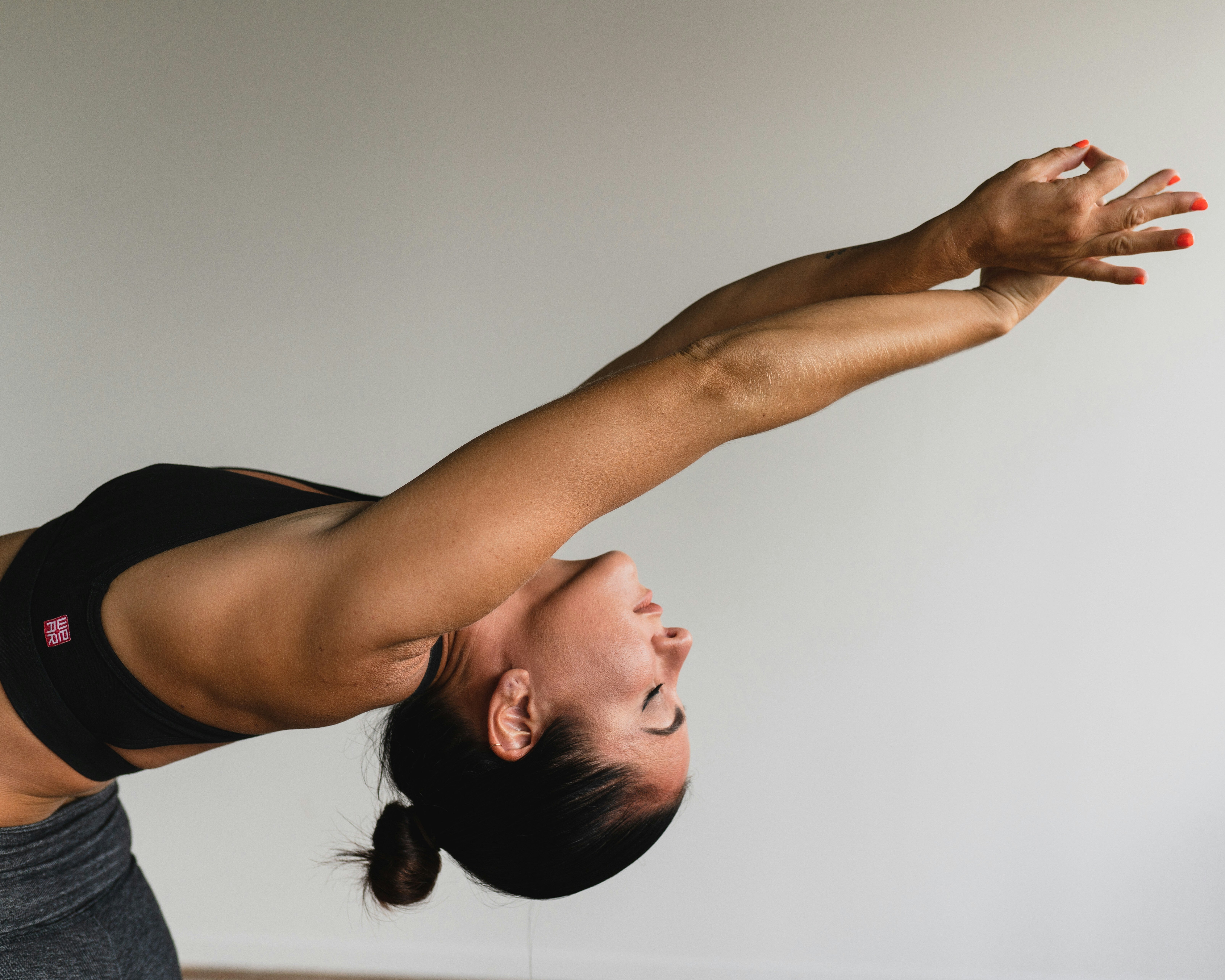
!function(n){if(!window.cnx){window.cnx={},window.cnx.cmd=[];var t=n.createElement('iframe');t.display='none',t.onload=function(){var n=t.contentWindow.document,c=n.createElement('script');c.src='//cd.connatix.com/connatix.player.js',c.setAttribute('async','1'),c.setAttribute('type','text/javascript'),n.body.appendChild(c)},n.head.appendChild(t)}}(document);(new Image()).src = 'https://capi.connatix.com/tr/si?token=8b034f64-513c-4987-b16f-42d6008f7feb';cnx.cmd.push(function(){cnx({"playerId":"8b034f64-513c-4987-b16f-42d6008f7feb","mediaId":"c41e05a6-7ba0-42f1-8023-0f5ff30eab87"}).render("6a589c96e4b07a7875d1d191");}); Lower back pain affects about 80% of us at one point or another, according to the NHS. Thankfully, fewer than 1% of those cases require urgent medical attention. But the pain can still affect your quality of life, and might mean you’re less tempted to exercise. That can be a shame, as the NHS explained, “keeping as active as possible can help you to recover and do the things that are important to you”. Avoiding movement for more than a day or two in mild back pain cases might actually worsen your condition, the health service added. According to a 2019 analysis published in the British Journal of Sports Medicine, four activities in particular seemed the most effective at treating “non-specific chronic low back pain (NSCLBP)”. NSCLBP means doctors can’t find one specific cause for back pain. This applies to the “vast majority of chronic low back pain cases,” the study’s lead author, associate professor Daniel Belavy, said. What are the best exercises for lower back pain? This paper analysed 89 studies involving back pain and exercise. Researchers found that staying active seemed to be more effective than rest for NSCLBP. Belavy said: “There is a common misconception that if someone is in pain, they should be resting, but our research shows that when the pain has been there for a long time, exercise is an important part of treatment.” They found four training styles were the “most effective” at treating NSCLBP. These were: 1) Pilates This seemed to be the joint “best” exercise for dealing with the condition. Speaking to Healthline, Dr Courtney Gilbert, a physical medicine and rehabilitation expert, said: “Pilates teaches you how to articulate your spine and engage your deep core. Research has shown that Pilates can decrease low back pain compared to no exercise and non-specific exercise.” This can include exercising with a pilates machine (Joseph Pilates, who invented the exercise, called this a Universal Reformer machine: now they’re used in Reformer classes), or doing pilates on a mat. 2) Stabilisation or motor control exercise training “There was evidence that Pilates and stabilisation or motor control exercise training were the best of these exercises for reducing pain,” Belavy said. Stabilisation exercises can include strengthening your core and might involve crunches, bridges, and planks. Motor control exercise training, meanwhile, typically aims to retrain the muscles near your spine to become more co-ordinated and stronger. This can include balance training and other moves like hip bridges, sitting knee extensions, and even squats. 3) Resistance exercise You might know this as strength training. It means using weights and resistance training at increasingly high loads to build your muscles up. We’ve written before at HuffPost UK about how “tight” hips that you might think need stretching can actually be weak hips that would benefit from strengthening. A similar principle can apply here. Some strengthening exercises include weighted squats, push-ups, deadlifts, bench presses, and more. 4) Aerobic exercise Basically, activities like walking and running. You might want to build up your pace and distance if you haven’t exercised in a while – “our study provides evidence that active therapies where the patient is guided, actively encouraged to move and exercise in a progressive fashion are the most effective,” Belavy shared. What doesn’t work for back pain? Interestingly, this paper found that “stretching and McKenzie exercises, which is a treatment approach that uses a classification system to prescribe exercise”, were found to be the “least effective” kinds of exercises. The NHS advises you should always stop exercising if it makes your back pain worse. Speak to your GP if you’re worried about your back pain and/or aren’t sure about beginning new activity. Related... 150 Minutes Of Exercise A Week Is No Longer An 'Absolute Threshold' For Health Want To Keep Fit? The Best Exercises For Women's Longevity, By Age 14 Hallmarks Of Ageing That Regular Exercise Can Slow Down
Lower back pain affects about 80% of us at one point or another, according to the NHS. Thankfully, fewer than 1% of those cases require urgent medical attention. But the pain can still affect your quality of life, and might mean you’re less tempted to exercise. That can be a shame, as the NHS explained, “keeping as active as possible can help you to recover and do the things that are important to you”. Avoiding movement for more than a day or two in mild back pain cases might actually worsen your condition, the health service added. According to a 2019 analysis published in the British Journal of Sports Medicine, four activities in particular seemed the most effective at treating “non-specific chronic low back pain (NSCLBP)”. NSCLBP means doctors can’t find one specific cause for back pain. This applies to the “vast majority of chronic low back pain cases,” the study’s lead author, associate professor Daniel Belavy, said. What are the best exercises for lower back pain? This paper analysed 89 studies involving back pain and exercise. Researchers found that staying active seemed to be more effective than rest for NSCLBP. Belavy said: “There is a common misconception that if someone is in pain, they should be resting, but our research shows that when the pain has been there for a long time, exercise is an important part of treatment.” They found four training styles were the “most effective” at treating NSCLBP. These were: 1) Pilates This seemed to be the joint “best” exercise for dealing with the condition. Speaking to Healthline, Dr Courtney Gilbert, a physical medicine and rehabilitation expert, said: “Pilates teaches you how to articulate your spine and engage your deep core. Research has shown that Pilates can decrease low back pain compared to no exercise and non-specific exercise.” This can include exercising with a pilates machine (Joseph Pilates, who invented the exercise, called this a Universal Reformer machine: now they’re used in Reformer classes), or doing pilates on a mat. 2) Stabilisation or motor control exercise training “There was evidence that Pilates and stabilisation or motor control exercise training were the best of these exercises for reducing pain,” Belavy said. Stabilisation exercises can include strengthening your core and might involve crunches, bridges, and planks. Motor control exercise training, meanwhile, typically aims to retrain the muscles near your spine to become more co-ordinated and stronger. This can include balance training and other moves like hip bridges, sitting knee extensions, and even squats. 3) Resistance exercise You might know this as strength training. It means using weights and resistance training at increasingly high loads to build your muscles up. We’ve written before at HuffPost UK about how “tight” hips that you might think need stretching can actually be weak hips that would benefit from strengthening. A similar principle can apply here. Some strengthening exercises include weighted squats, push-ups, deadlifts, bench presses, and more. 4) Aerobic exercise Basically, activities like walking and running. You might want to build up your pace and distance if you haven’t exercised in a while – “our study provides evidence that active therapies where the patient is guided, actively encouraged to move and exercise in a progressive fashion are the most effective,” Belavy shared. What doesn’t work for back pain? Interestingly, this paper found that “stretching and McKenzie exercises, which is a treatment approach that uses a classification system to prescribe exercise”, were found to be the “least effective” kinds of exercises. The NHS advises you should always stop exercising if it makes your back pain worse. Speak to your GP if you’re worried about your back pain and/or aren’t sure about beginning new activity. Related... 150 Minutes Of Exercise A Week Is No Longer An 'Absolute Threshold' For Health Want To Keep Fit? The Best Exercises For Women's Longevity, By Age 14 Hallmarks Of Ageing That Regular Exercise Can Slow Down