
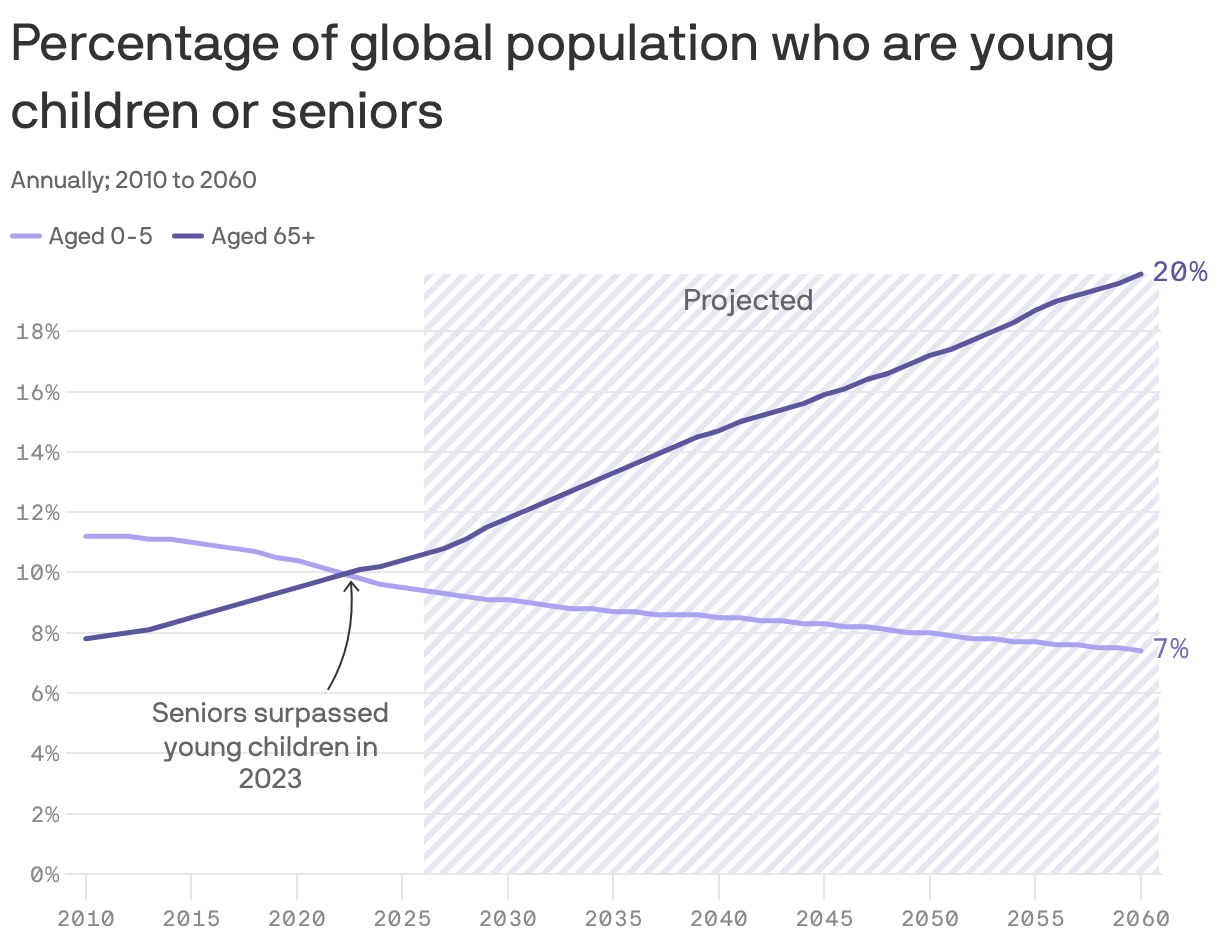
Data: U.S. Census Bureau, International Database; Chart: Noah Bressner/Axios People 65 and older now outnumber children ages 5 and younger worldwide for the first time in recorded history, according to a new report by the U.S. Census. Why it matters: A global plunge in fertility — demographers' term for the number of children being born — and increased longevity are creating a demographic inversion that's projected to deepen for decades. It's a trend that's shifting the historic balance between working-age people and older adults. By the numbers: The scale and speed of the shift as the youngest Baby Boomers move toward their mid-60s are striking. They reflect the scope of the challenge in caring for the elderly and maintaining programs such as Social Security in the U.S., an Axios analysis of the Census data found. More than 71% of the world's population lived in countries with fertility rates at or below the roughly 2.1-births-per-woman replacement level in 2023. That's up from 45% in 2013. The Census says the world reached that tipping point much earlier than demographers expected just a decade ago. The population of those 65+ is projected to grow from 852 million in 2025 to 2 billion in 2060. Stunning stat: That increase would account for about 55% of all net global population growth over that period, according to an Axios calculation using Census projections. The world's total population is projected to rise from 8.13 billion to 10.23 billion by 2060. State of play: The low-birth era has spread far beyond wealthy countries. China and India — the world's two most populous countries — now have fertility rates below the roughly 2.1-births-per-woman replacement level, the Census report says. Bangladesh, Mexico and Vietnam are among the most populous countries to fall below replacement-level births since 2013. Zoom in: In many countries with low birth rates, the decline creates what the report calls a "fertility trap." Smaller younger generations follow larger older ones, accelerating the overall aging of a population and, in some places, eventual population decline. That means fewer potential workers and caregivers supporting growing older populations — putting pressure on pensions, health systems and long-term care. The intrigue: The U.S. ranked as the 48th-oldest country out of 227 in 2025, with 18.9% of its population age 65 or older. By 2060, the U.S. share of older adults is projected to climb to 23.4%, but its global aging rank is predicted to fall to 110th because other countries are aging much faster. Data: U.S. Census Bureau, International Database, 2023, Axios calculations; Chart: Russell Contreras/Axios Zoom out: Europe remains the world's oldest region, but the biggest numerical shift in aging is elsewhere. Asia's 65+ population is projected to surge from 487 million to 1.24 billion from 2025 to 2060 — accounting for roughly two-thirds of the global increase. Africa remains by far the youngest region, but its older population is projected to more than quadruple from 60 million to 249 million — surpassing Europe's 214 million by 2060. Globally, the share of people 65+ is projected to nearly double from 10.5% to 19.6% by 2060. Yes, but: A nation's rising percentage of seniors isn't necessarily a catastrophe. Longer lives represent one of the great achievements of the past century: fewer deaths in infancy and midlife, and more people surviving into old age. Older people are less likely to commit crime and many can remain in the workforce, help fill labor shortages and contribute through caregiving and volunteering. Between the lines: The demographic shift could force societies to rethink old age as an economic asset rather than simply a cost, Census report contributor Andrew Scott said. He argues in the report that preventive health, longer working lives and age-friendly jobs could turn longer lifespans into healthier, more economically engaged years.
Back to Top News
Top
September 3, 2026 at 9:20 AM
Historic first: Older adults now outnumber the youngest children for the first time
Axios


