
!function(n){if(!window.cnx){window.cnx={},window.cnx.cmd=[];var t=n.createElement('iframe');t.display='none',t.onload=function(){var n=t.contentWindow.document,c=n.createElement('script');c.src='//cd.connatix.com/connatix.player.js',c.setAttribute('async','1'),c.setAttribute('type','text/javascript'),n.body.appendChild(c)},n.head.appendChild(t)}}(document);(new Image()).src = 'https://capi.connatix.com/tr/si?token=8b034f64-513c-4987-b16f-42d6008f7feb';cnx.cmd.push(function(){cnx({"playerId":"8b034f64-513c-4987-b16f-42d6008f7feb","mediaId":"86761a72-20e6-45af-9470-824a865a6020"}).render("6a901d38e4b0a9d5e57cf219");}); About half an hour after my childhood dog fell asleep, the following routine would kick in. First, his snoring would break up into periods of excited snorting. Then, his hind leg would start to twitch. Minutes later, he’d be cycling his limbs frantically, an expression of intense concentration on his snoozing visage. We were convinced he was chasing animals in his dreams (friends have described similar experiences with their own dogs). But do dogs even have what we’d recognise as dreams? And if so, what goes on in their canine minds? Do dogs dream? It looks like they probably do. One study that tracked the animals’ sleep patterns found that, like humans, dogs seem to experience the rapid eye movement (REM) stage of sleep associated with dreaming. And we know that mammals like rats appear to dream similarly to people (their minds tend to replay what happened during their days). Some researchers have applied that finding to all mammals, including cats and dogs, based on how similar their brain structures are. So what do dogs dream about? That’s less researched – but again, experts have their theories. For instance, David Peña-Guzmán, author of the book When Animals Dream, told Scientific American that dogs might dream in scents (they rely on their nose a lot more than people do). As with the rats in the aforementioned study, dream researcher Deirdre Barrett, who wrote The Committee of Sleep, told the publication that dogs might replay the events of the day in their dreams. “Whatever you can observe dogs being interested in by day is what you would expect to show up in their dreams... That’s so much how it works for us that it would be surprising if they somehow did the compensation pattern,” she stated. If your dog loves food, running around the garden, or simply being with their beloved owners, then those events probably feature heavily in their dreams. Studies seem to back this theory. Scientists have previously tracked what happened when scientists disabled the part of dogs’ brains that stopped them from moving to their fullest extent while they slept. That meant the usual muscle-locking mechanisms that keep mammals (mostly) still during vivid physical dreams were temporarily out of order, so dogs acted out their dreams. Stanley Coren, a professor emeritus of psychology at the University of British Columbia and the author of Do Dogs Dream? Nearly Everything Your Dog Wants You to Know, told Live Science: “What we’ve basically found is that dogs dream doggy things. “So, pointers will point at dream birds, and Dobermans will chase dream burglars. The dream pattern in dogs seems to be very similar to the dream pattern in humans.” One last fact – the professor said that smaller dogs seemed to have smaller dreams, while bigger species had more long-lasting ones. The more you know... Related... Apparently, dogs might know when you’re lying to them Turns Out, We Can't Read Our Dogs' Emotions All That Well Study Names Dogs With The Most (And Least) Wolf DNA
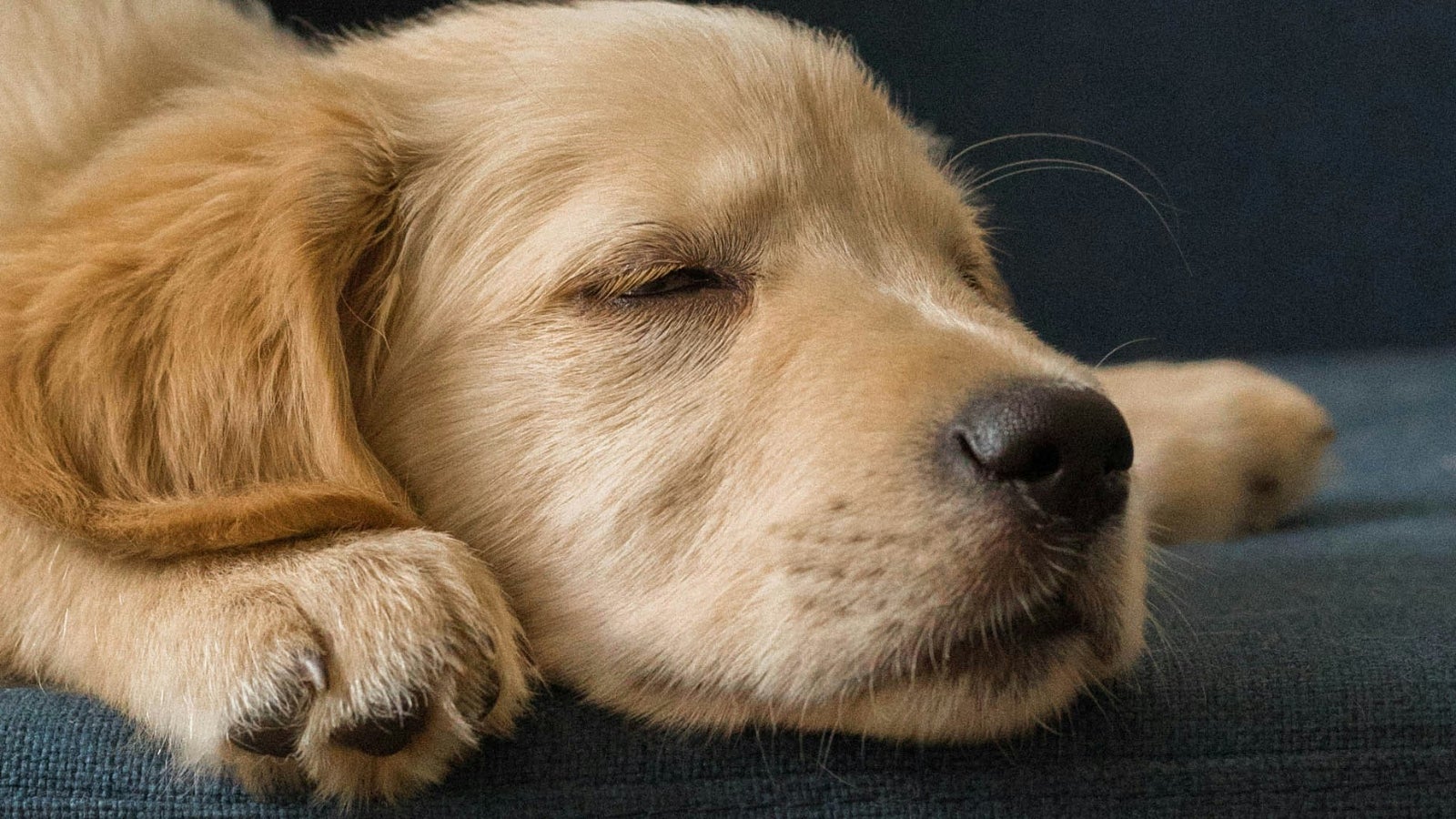
About half an hour after my childhood dog fell asleep, the following routine would kick in. First, his snoring would break up into periods of excited snorting. Then, his hind leg would start to twitch. Minutes later, he’d be cycling his limbs frantically, an expression of intense concentration on his snoozing visage. We were convinced he was chasing animals in his dreams (friends have described similar experiences with their own dogs). But do dogs even have what we’d recognise as dreams? And if so, what goes on in their canine minds? Do dogs dream? It looks like they probably do. One study that tracked the animals’ sleep patterns found that, like humans, dogs seem to experience the rapid eye movement (REM) stage of sleep associated with dreaming. And we know that mammals like rats appear to dream similarly to people (their minds tend to replay what happened during their days). Some researchers have applied that finding to all mammals, including cats and dogs, based on how similar their brain structures are. So what do dogs dream about? That’s less researched – but again, experts have their theories. For instance, David Peña-Guzmán, author of the book When Animals Dream, told Scientific American that dogs might dream in scents (they rely on their nose a lot more than people do). As with the rats in the aforementioned study, dream researcher Deirdre Barrett, who wrote The Committee of Sleep, told the publication that dogs might replay the events of the day in their dreams. “Whatever you can observe dogs being interested in by day is what you would expect to show up in their dreams... That’s so much how it works for us that it would be surprising if they somehow did the compensation pattern,” she stated. If your dog loves food, running around the garden, or simply being with their beloved owners, then those events probably feature heavily in their dreams. Studies seem to back this theory. Scientists have previously tracked what happened when scientists disabled the part of dogs’ brains that stopped them from moving to their fullest extent while they slept. That meant the usual muscle-locking mechanisms that keep mammals (mostly) still during vivid physical dreams were temporarily out of order, so dogs acted out their dreams. Stanley Coren, a professor emeritus of psychology at the University of British Columbia and the author of Do Dogs Dream? Nearly Everything Your Dog Wants You to Know, told Live Science: “What we’ve basically found is that dogs dream doggy things. “So, pointers will point at dream birds, and Dobermans will chase dream burglars. The dream pattern in dogs seems to be very similar to the dream pattern in humans.” One last fact – the professor said that smaller dogs seemed to have smaller dreams, while bigger species had more long-lasting ones. The more you know... Related... Apparently, dogs might know when you’re lying to them Turns Out, We Can't Read Our Dogs' Emotions All That Well Study Names Dogs With The Most (And Least) Wolf DNA