
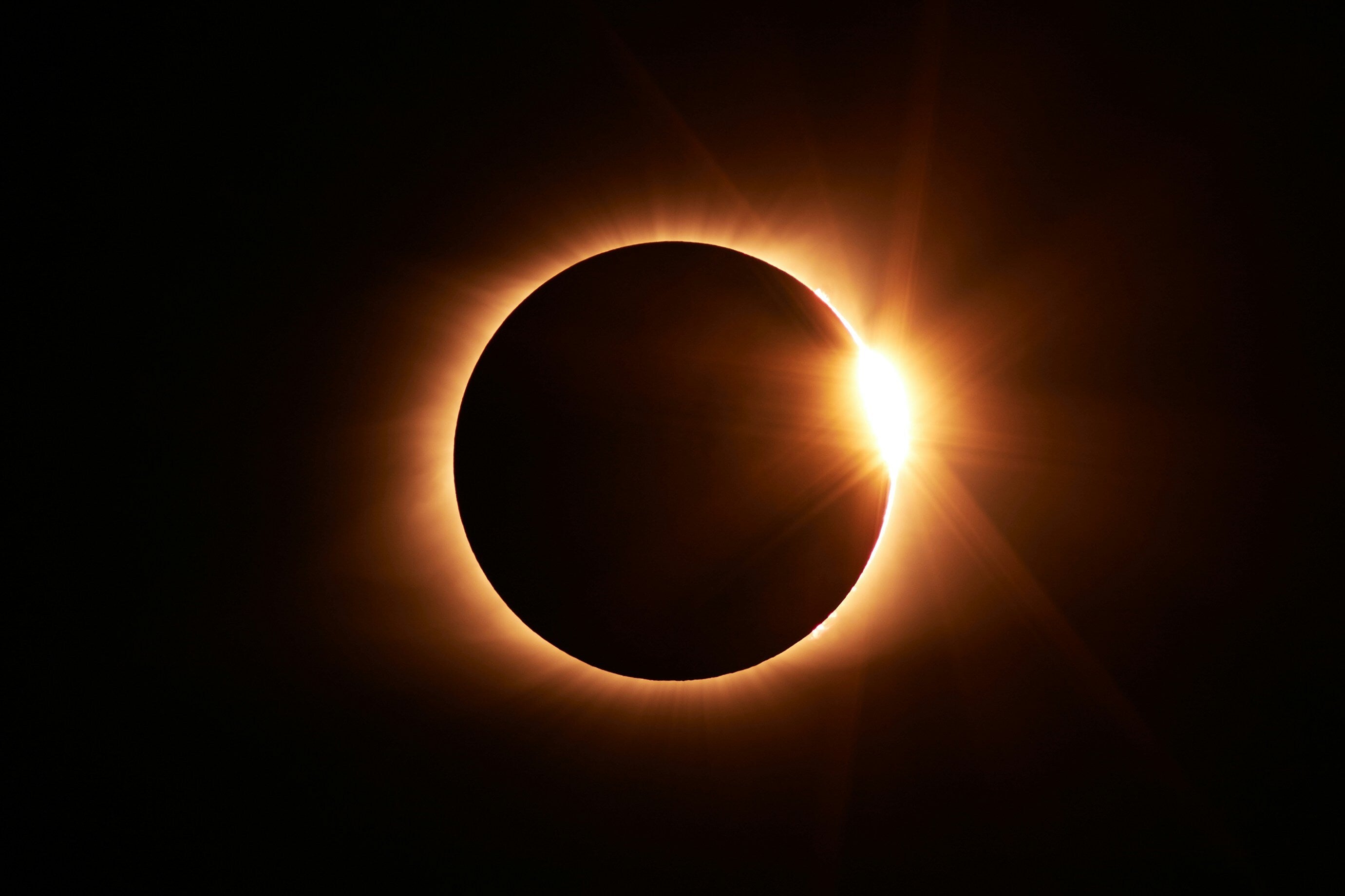
It's the biggest since 1999 According to the experts at BBC Science Focus, we have around two solar eclipses per year. Which might sound staggering because from our perspective, they are incredibly rare, right? How many times in your life can you say you’ve seen one compared to lunar eclipses? Dr Alistair Gunn, a radio astronomer at the Jodrell Bank Centre for Astrophysics at the University of Manchester explains: “A lunar eclipse, when the Moon moves through the shadow of the Earth, is visible from wherever the Moon is above the horizon, which is over half of the Earth. However, when the Moon appears to move in front of the Sun during a solar eclipse, the shadow cast by the Moon is much smaller than Earth. It’s only about 480km (300 miles) wide when cast onto the Earth’s surface. “Solar eclipses are therefore only visible from within a narrow path across the Earth, making it difficult to get to a location to see one. This is why they are visible less often from any given location.” However, in a couple of weeks, some parts of the UK will experience the largest solar eclipse in over 25 years. Where to see the August solar eclipse in the UK According to the UK Health and Security Agency (UKHSA): “The solar eclipse will be visible across the whole of the UK. “People watching in the South West are likely to see the greatest proportion of the Sun covered by the Moon… this will be the most coverage seen from the UK and Ireland since the 1999 solar eclipse - which was total from most of Cornwall and Devon - making it a genuinely special occasion.” In fact, the BBC states that people in Bristol, Somerset, Gloucestershire and Wiltshire are expected to see around 90% of the Sun obscured, while Cornwall and the Isles of Scilly should get some of the best views anywhere in the UK with 95%. How to safely watch the solar eclipse You can actually buy solar eclipse glasses! If you are looking to purchase these, the UKHSA advises ensuring the ones you buy have specially designed filters that meet the international safety standard ISO 12312-2:2015(E). Alternatively, they advise, you can watch the eclipse indirectly without any specialist equipment at all. Safe options include: a pinhole viewer, which you can easily make at home viewing the Sun’s image projected through a colander or the gaps between tree leaves projecting the Sun’s image onto a sheet of paper using a simple pinhole projector Related... An Asteroid The Size Of The Empire State Building Is Set To Pass Close To Earth Sloths Could Help Us Manage Disease And Last Longer In Space Yep, Pooping In Space Is Just As Weird As You Think
Back to Lifestyle
Lifestyle
July 31, 2026 at 10:05 AM
The Largest Solar Eclipse In 25 Years Is Coming To The UK – Here’s Where And When To Look
HuffPost UK