
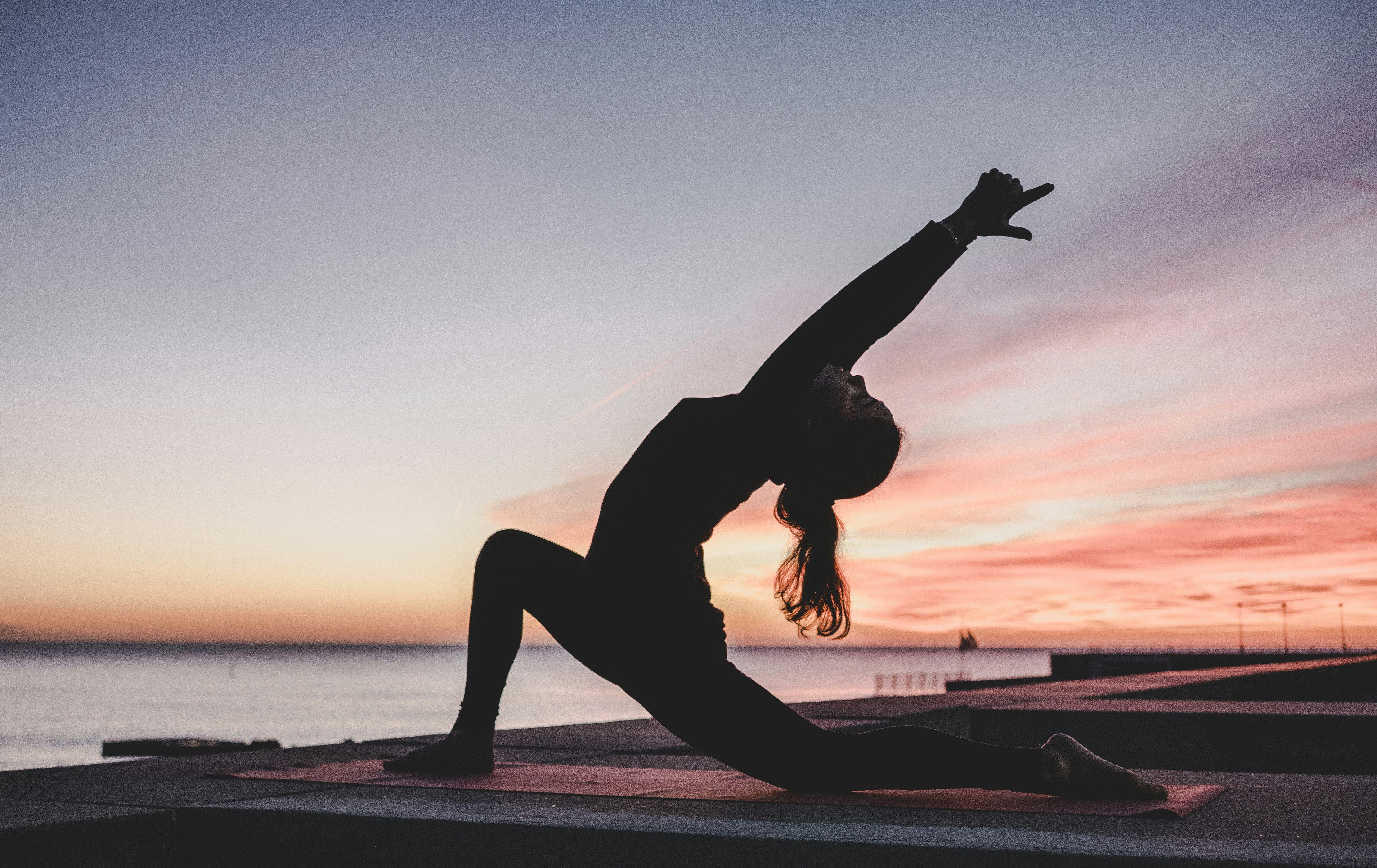
!function(n){if(!window.cnx){window.cnx={},window.cnx.cmd=[];var t=n.createElement('iframe');t.display='none',t.onload=function(){var n=t.contentWindow.document,c=n.createElement('script');c.src='//cd.connatix.com/connatix.player.js',c.setAttribute('async','1'),c.setAttribute('type','text/javascript'),n.body.appendChild(c)},n.head.appendChild(t)}}(document);(new Image()).src = 'https://capi.connatix.com/tr/si?token=8b034f64-513c-4987-b16f-42d6008f7feb';cnx.cmd.push(function(){cnx({"playerId":"8b034f64-513c-4987-b16f-42d6008f7feb","mediaId":"426003e6-31ab-4ecf-b3ce-28c645b13714"}).render("6a7d7f0ce4b08accea2582f7");}); In general, exercise seems like a pretty great way to improve your sleep. Even half an hour of physical activity a day has been associated with better quality shut-eye that same night. But if you’re looking for the most efficient workout around, researchers think they might have found an answer in a specific form of yoga. What’s the best exercise for sleep? In a meta-analysis published in Sleep and Biological Rhythms, researchers looked at 30 randomised controlled trials involving sleep and exercise among those with sleep disorders. All in, the studies included 2,500 participants from over a dozen countries. After looking at these reams of data, the study authors found that the “optimal exercise prescription” seemed to be high-intensity yoga, conducted in two up-to-30-minute classes a week. Next came: Walking, Resistance (strength) training. Still, compared to aerobic exercise, like jogging or swimming, high-intensity yoga seemed “significantly superior” at improving sleep in this research. “This study indicates that high-intensity yoga, twice a week, with a duration of ≤ 30 min, and lasting 8–10 weeks, has the best effect on improving the sleep quality of people with sleep disorders,” the study concluded. However, they noted that more research is needed due to the limited number of studies. What is high-intensity yoga? You can take HIIT yoga classes, which intersperse bursts of intense activity with slower periods. But more broadly speaking, high-intensity yoga involves faster movement between poses and may lead to a higher heart rate and more weight-bearing movement than slower, gentler kinds. Previous research has suggested that yoga may improve sleep time by almost two hours among those with insomnia. However, it wasn’t the only movement that seemed to confer sleep benefits in this analysis. Half an hour’s walking a day seems to improve your shut-eye. Meanwhile, three hours of strength training weekly has been linked to 4.5 hours of extra kip. BRB, just heading to the gym... Related... Scientists Found 4 Signs Of The Ideal Pillow For Your Back, Neck, And Sleep New Study Links Loud Snoring Issue With Hard-To-Spot Thyroid Disorder Coffee Isn't The Only Way To Recover From Sleep Deprivation
In general, exercise seems like a pretty great way to improve your sleep. Even half an hour of physical activity a day has been associated with better quality shut-eye that same night. But if you’re looking for the most efficient workout around, researchers think they might have found an answer in a specific form of yoga. What’s the best exercise for sleep? In a meta-analysis published in Sleep and Biological Rhythms, researchers looked at 30 randomised controlled trials involving sleep and exercise among those with sleep disorders. All in, the studies included 2,500 participants from over a dozen countries. After looking at these reams of data, the study authors found that the “optimal exercise prescription” seemed to be high-intensity yoga, conducted in two up-to-30-minute classes a week. Next came: Walking, Resistance (strength) training. Still, compared to aerobic exercise, like jogging or swimming, high-intensity yoga seemed “significantly superior” at improving sleep in this research. “This study indicates that high-intensity yoga, twice a week, with a duration of ≤ 30 min, and lasting 8–10 weeks, has the best effect on improving the sleep quality of people with sleep disorders,” the study concluded. However, they noted that more research is needed due to the limited number of studies. What is high-intensity yoga? You can take HIIT yoga classes, which intersperse bursts of intense activity with slower periods. But more broadly speaking, high-intensity yoga involves faster movement between poses and may lead to a higher heart rate and more weight-bearing movement than slower, gentler kinds. Previous research has suggested that yoga may improve sleep time by almost two hours among those with insomnia. However, it wasn’t the only movement that seemed to confer sleep benefits in this analysis. Half an hour’s walking a day seems to improve your shut-eye. Meanwhile, three hours of strength training weekly has been linked to 4.5 hours of extra kip. BRB, just heading to the gym... Related... Scientists Found 4 Signs Of The Ideal Pillow For Your Back, Neck, And Sleep New Study Links Loud Snoring Issue With Hard-To-Spot Thyroid Disorder Coffee Isn't The Only Way To Recover From Sleep Deprivation