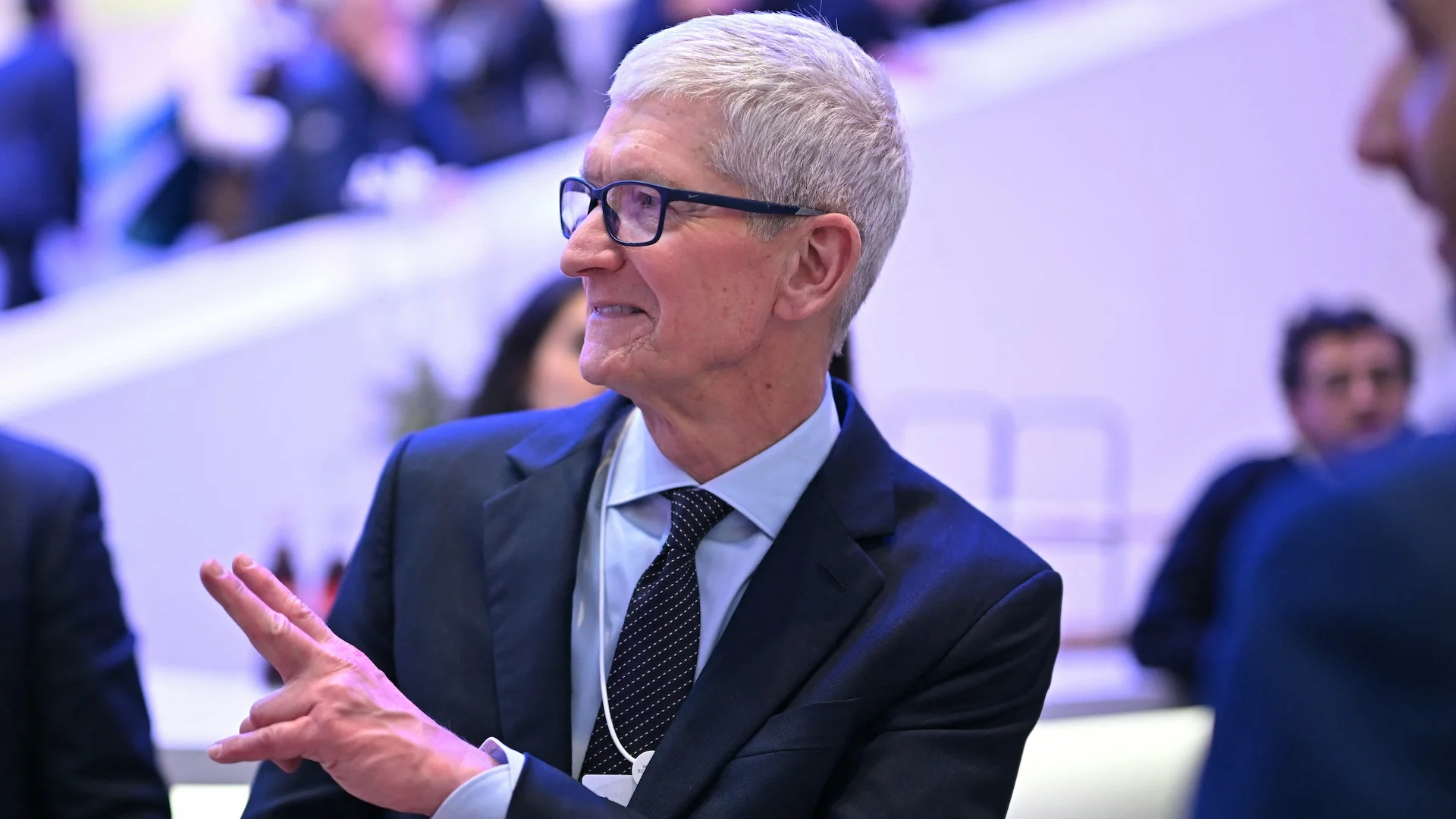
Google DeepMind CEO Demis Hassabis (pictured right) pushed back hard against Steve Yegge's claims about Google's internal AI adoption. Bloomberg/Bloomberg via Getty Images Former Googler and software veteran Steve Yegge made a striking claim about the search giant's internal AI adoption. Yegge said there is a big gap in AI usage between the Google DeepMind team and the rest of the company. Google DeepMind's CEO called the claim "absolute nonsense." Other Googlers publicly pushed back too. Yegge doubled down. A former Google engineer has gotten the company's goat. And after receiving rare pushback in public from the tech giant's AI CEO, the computer programming veteran is now doubling down. Steve Yegge, a software engineering veteran who used to work at the company, has faced a public onslaught after claiming last week that a "buddy at Google who's been a tech director there for about 20 years" essentially said that their AI adoption internally was severely lagging. Google's internal AI adoption curve, Yegge wrote last week, is the same "as John Deere, the tractor company." "Most of the industry has the same internal adoption curve: 20% agentic power users, 20% outright refusers, 60% still using Cursor or equivalent chat tool," Yegge wrote on X on April 13. "It turns out Google has this curve too." Business Insider has not independently verified Yegge's claims, which he presented as secondhand. The company did not respond to a request for comment. Externally, Google was viewed as entering 2026 on a winning streak, arguably catching up to OpenAI in the generative AI race and erasing a once-embarrassing gap for the company whose research helped lay the foundation for large language models. Yegge's post sparked a firestorm of public backlash from the company's workers, stretching from some of Google's top rungs down to lower-level engineers. Most notable was Google DeepMind CEO Demis Hassabis, who didn't seem to hold much back in attempting to set the record straight. Maybe tell your buddy to do some actual work and to stop spreading absolute nonsense. This post is completely false and just pure clickbait. — Demis Hassabis (@demishassabis) April 14, 2026 "Maybe tell your buddy to do some actual work and to stop spreading absolute nonsense," the Google AI boss wrote in a reply to Yegge's original post. "This post is completely false and just pure clickbait." In response to Hassabis, Yegge wrote that he would apologize for his initial post, "If Google can convince me that half their engineers are burning 4M tokens a day." A week after his initial post on the topic, Yegge doubled down on Monday, writing that he had heard from "Googlers from multiple orgs" who outlined what he described as "a two-tier system," in which Hassabis' team uses Anthropic's Claude frequently, and the rest of Google largely does not. My tweet last week about Google's AI adoption drew a lot of pushback, to say the least. Since then, Googlers from multiple orgs have reached out to me independently and anonymously. They've expressed fear of being doxxed, concern about what they saw as bullying of me, and… — Steve Yegge (@Steve_Yegge) April 20, 2026 "DeepMind engineers use Claude as a daily tool. Most of the rest of Google does not," Yegge wrote, adding that non-DeepMind engineers "get pushed onto internal Gemini variants." "This is not a picture of an engineering org that is fine," Yegge wrote on X on Monday. Anthropic's Claude Code is widely considered the industry standard for agentic AI coding tools. OpenAI and Google have rushed to catch up, but for now, many software engineers say they prefer Anthropic. Last week, Anthropic rolled out Opus 4.7, which it said was "a notable improvement" and that "users report being able to hand off their hardest coding work—the kind that previously needed close supervision—to Opus 4.7 with confidence." Yegge argues Google is cherry-picking rosy data AI adoption within companies is a major focal point in Silicon Valley. Hyperscalers like Meta have made headlines over employee leaderboards that track AI token use. Addy Osmani, director of Google Cloud, said Yegge's original claims didn't "match the state of agentic coding at our company." Osmani wrote that over 40,000 Google software engineers use agentic coding weekly. "With so many friends working at other frontier labs and start-ups to give ourselves a baseline, Google is anything but average," Osmani wrote. Much love for your work, Steve. On behalf of @Google, this post doesn't match the state of agentic coding at our company. Over 40K SWEs use agentic coding weekly here. Googlers have access to our own versions of @antigravity, @geminicli, custom models, skills, CLIs and MCPs for… — Addy Osmani (@addyosmani) April 13, 2026 On Monday, Yegge said Osmani's statistic didn't tell the full story. "Weekly use of a thin tool is precisely the box-checking I described in the original post. Volume of opens isn't adoption — and 'weekly' is a low bar that includes a lot of people who tried it once and went back to writing code by hand," Yegge wrote. Overall, Yegge seemed to characterize the Googler backlash to his original post as spin. "You can choose to believe Google's AI PR team and their core AI researchers, or you can believe your friends who actually work there," he wrote. "I've made my choice." Read the original article on Business Insider
Google DeepMind CEO Demis Hassabis (pictured right) pushed back hard against Steve Yegge's claims about Google's internal AI adoption.Bloomberg/Bloomberg via Getty Images Former Googler and software veteran Steve Yegge made a striking claim about the search giant's internal AI adoption. Yegge said there is a big gap in AI usage between the Google DeepMind team and the rest of the company. Google DeepMind's CEO called the claim "absolute nonsense." Other Googlers publicly pushed back too. Yegge doubled down. A former Google engineer has gotten the company's goat. And after receiving rare pushback in public from the tech giant's AI CEO, the computer programming veteran is now doubling down. Steve Yegge, a software engineering veteran who used to work at the company, has faced a public onslaught after claiming last week that a "buddy at Google who's been a tech director there for about 20 years" essentially said that their AI adoption internally was severely lagging. Google's internal AI adoption curve, Yegge wrote last week, is the same "as John Deere, the tractor company." "Most of the industry has the same internal adoption curve: 20% agentic power users, 20% outright refusers, 60% still using Cursor or equivalent chat tool," Yegge wrote on X on April 13. "It turns out Google has this curve too." Business Insider has not independently verified Yegge's claims, which he presented as secondhand. The company did not respond to a request for comment. Externally, Google was viewed as entering 2026 on a winning streak, arguably catching up to OpenAI in the generative AI race and erasing a once-embarrassing gap for the company whose research helped lay the foundation for large language models. Yegge's post sparked a firestorm of public backlash from the company's workers, stretching from some of Google's top rungs down to lower-level engineers. Most notable was Google DeepMind CEO Demis Hassabis, who didn't seem to hold much back in attempting to set the record straight. Maybe tell your buddy to do some actual work and to stop spreading absolute nonsense. This post is completely false and just pure clickbait. — Demis Hassabis (@demishassabis) April 14, 2026 "Maybe tell your buddy to do some actual work and to stop spreading absolute nonsense," the Google AI boss wrote in a reply to Yegge's original post. "This post is completely false and just pure clickbait." In response to Hassabis, Yegge wrote that he would apologize for his initial post, "If Google can convince me that half their engineers are burning 4M tokens a day." A week after his initial post on the topic, Yegge doubled down on Monday, writing that he had heard from "Googlers from multiple orgs" who outlined what he described as "a two-tier system," in which Hassabis' team uses Anthropic's Claude frequently, and the rest of Google largely does not. My tweet last week about Google's AI adoption drew a lot of pushback, to say the least. Since then, Googlers from multiple orgs have reached out to me independently and anonymously. They've expressed fear of being doxxed, concern about what they saw as bullying of me, and… — Steve Yegge (@Steve_Yegge) April 20, 2026 "DeepMind engineers use Claude as a daily tool. Most of the rest of Google does not," Yegge wrote, adding that non-DeepMind engineers "get pushed onto internal Gemini variants." "This is not a picture of an engineering org that is fine," Yegge wrote on X on Monday. Anthropic's Claude Code is widely considered the industry standard for agentic AI coding tools. OpenAI and Google have rushed to catch up, but for now, many software engineers say they prefer Anthropic. Last week, Anthropic rolled out Opus 4.7, which it said was "a notable improvement" and that "users report being able to hand off their hardest coding work—the kind that previously needed close supervision—to Opus 4.7 with confidence." Yegge argues Google is cherry-picking rosy data AI adoption within companies is a major focal point in Silicon Valley. Hyperscalers like Meta have made headlines over employee leaderboards that track AI token use. Addy Osmani, director of Google Cloud, said Yegge's original claims didn't "match the state of agentic coding at our company." Osmani wrote that over 40,000 Google software engineers use agentic coding weekly. "With so many friends working at other frontier labs and start-ups to give ourselves a baseline, Google is anything but average," Osmani wrote. Much love for your work, Steve. On behalf of @Google, this post doesn't match the state of agentic coding at our company. Over 40K SWEs use agentic coding weekly here. Googlers have access to our own versions of @antigravity, @geminicli, custom models, skills, CLIs and MCPs for… — Addy Osmani (@addyosmani) April 13, 2026 On Monday, Yegge said Osmani's statistic didn't tell the full story. "Weekly use of a thin tool is precisely the box-checking I described in the original post. Volume of opens isn't adoption — and 'weekly' is a low bar that includes a lot of people who tried it once and went back to writing code by hand," Yegge wrote. Overall, Yegge seemed to characterize the Googler backlash to his original post as spin. "You can choose to believe Google's AI PR team and their core AI researchers, or you can believe your friends who actually work there," he wrote. "I've made my choice." Read the original article on Business Insider