
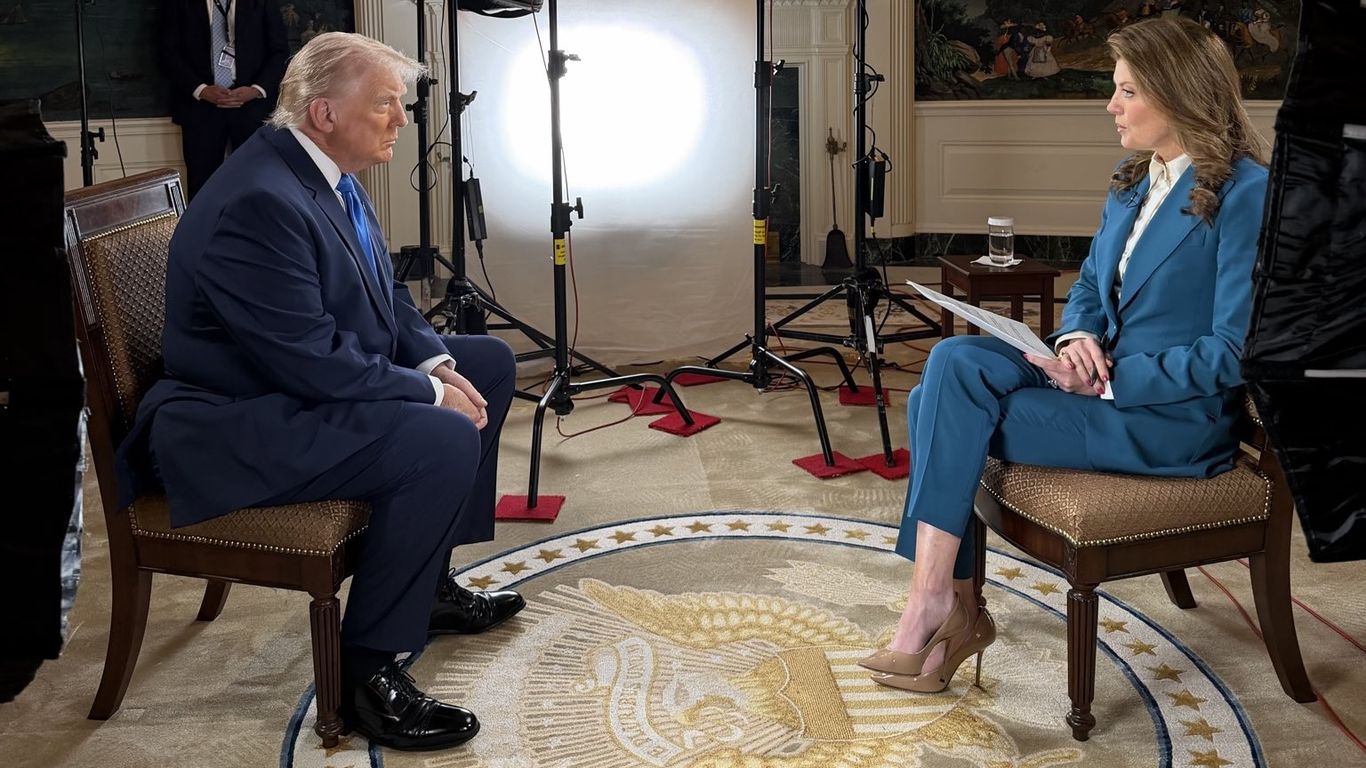
One uncomfortable question was all it took for President Trump to resume hostilities with the Washington press, less than 24 hours after their shared brush with death. Why it matters: In just a few years, the president, the press and the country have metabolized an entire generation's worth of political violence. Trump, more than anyone, has stopped treating these moments as extraordinary. "I wasn't worried. I understand life. We live in a crazy world," he told "60 Minutes" in his first sit-down interview since a gunman stormed the White House Correspondents' Dinner on Saturday night. The big picture: Trump waved off the notion that he — a president who has now survived three assassination attempts in two years — could do anything to change the trajectory of political violence in the United States. "You go back 20 years, 40 years, 100 years, 200 years, 500 years, it's always been there. ... And I'm not sure that it's any more now than there was," Trump said. He then added: "I do think that the hate speech of the Democrats, much more so, is very dangerous. I really think it's very dangerous for the country." Zoom in: Trump played statesman in the immediate aftermath of Saturday's shooting, hailing the "tremendous amount of love and coming together" as he bantered with journalists in the White House briefing room. The president had come to the First Amendment dinner ready to attack. "I was all set to really rip it," he said. "I don't know if I could ever be as rough as I was going to be." "There was spirit in that room," Trump told "60 Minutes" anchor Norah O'Donnell the following day. "I mean, it was like the whole country was together. It was pretty amazing. It made a big impression." Zoom out: The truce didn't last long. Asked by O'Donnell whether the near-miss would change his relationship with the media, Trump pivoted to attacking Democrats — calling them and the press "almost one and the same." He then erupted when she read him a passage from the alleged shooter's manifesto: "I am no longer willing to permit a pedophile, rapist, and traitor to coat my hands with his crimes." "I'm not a rapist. I didn't rape anybody. I'm not a pedophile," Trump shot back, arguing that it was Democrats — not him — who were involved with Jeffrey Epstein. "You read that crap from some sick person?" he continued, telling O'Donnell she should be "ashamed" of herself, even as she reiterated that these were the words of the alleged shooter. "You shouldn't be reading that on '60 Minutes.' You're a disgrace." Between the lines: Trump has spent his second term at war with the press, suing major news outlets — including 60 Minutes" parent Paramount — for billions of dollars. He has blacklisted the AP from the Oval Office, stripped the White House Correspondents' Association of its century-old role in choosing the press pool, and routinely attacked individual reporters by name. Few topics provoke Trump like Epstein: He sued the Wall Street Journal for $10 billion over its reporting on a bawdy 50th birthday letter he allegedly sent the convicted sex offender. The bottom line: "I don't know how long it'll last," Trump told O'Donnell of his détente with the press. He had his answer by the time the interview ended.
Back to Top News
Top
April 27, 2026 at 9:00 AM
Trump's 24-hour truce with the media
Axios


